The Pirkei Avot is a collection of theological teachings, maxims, and wisdom from the Rabbinic Jewish tradition. A few years ago, a member of our community passed on a little wisdom to me from that source. We got to talking about service, how we carry ourselves into the world, and what we feel our path is. And he said to me, “it’s important to remember to give from your surplus and not your supply.” It’s a simple statement, but there’s a lot of power behind it. So often, we get caught up in taking care of the needs of others or the day-to-day activities that we forget to take time for ourselves.
This week has been a perfect example of that. I had a lot of chores to do around here; some yard work. I ended up doing quite a bit of yard work over at my Mother in-law’s house. I spent time in the kitchen cooking. I fielded a phone call or two from a friend of mine who was in need.
And I am blessed to be able to do all these things; I enjoy them.
But the truth is, as it got a little closer to the end of the week, I started feeling a little bit ground down; a little bit outgunned. And I realized I hadn’t taken enough time for myself. So, this afternoon, I’m going to be out here in the garage. I’m going to carve a spoon or two. I’m going to listen to some music. I’m going to enjoy this absolutely gorgeous Saturday afternoon…
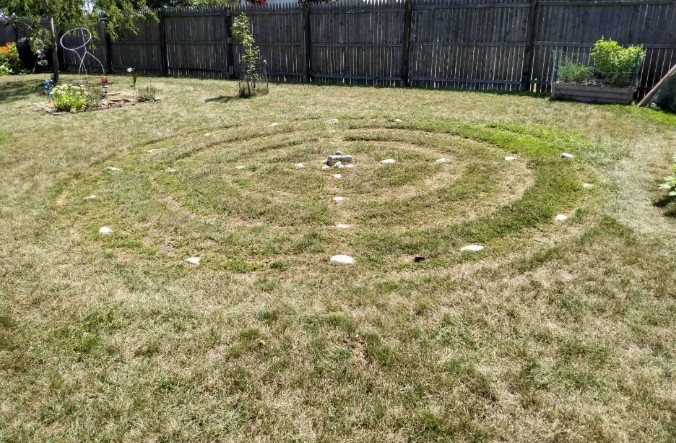
Yesterday, we gathered for a ceremony in the back yard while most of the rest of the civilized world 9-5’ed. As is generally the case whenever we get together, our focus quickly turned to the state of the world.
Our conversations are usually free-form and heavily seasoned with laughter and wry observations. That’s not to say our ceremonies are unstructured or lack direction. The form is there, though largely marbled through the meat, instead of plastered over it like a cast. There’s a necessary sacredness in coming together with laughter, especially in a world which seems to base so much of its existence upon cruelty, greed, conflict, and fear.
Eventually, we got around to the topic of peace, and how we might bring a little more of it into the world. As a great deal of our work is based upon the Medicine Wheel – or at least the version presented to us in the teachings of Grandfather Joseph Rael (aka Beautiful Painted Arrow) – I attempted to approach the question from this perspective.
The path of the Wheel begins in the East, with the rising of the sun. From there it follows the sun through the sky as it passes into the South, West, and North.
Agriculturally speaking, the East is where the seed is planted.
In the South, the garden is tended. It’s a time of expectation and uncertainty. Will there be too much rain or too little? Will the temperatures run to extremes? Will there be enough food for us all come the harvest? Will we have to deal with insects, deer, or rabbits?
In the West, the questions fall away, and the results are gathered in. We fill the cupboards and begin the necessary preparations to take us through the winter.
In the North, the long, dark time of howling winds, warm fires, and taking stock of the past year’s endeavors, we sustain ourselves on whatever we’ve put aside. If we planted good and healthy crops during the spring, that’s what will feed us as the snow piles up and the windowpanes rattle. If, instead, we’ve planted weeds and thorns, then that will be the source of our nourishment for the winter.
Perhaps, then, the process of peace begins with asking what we’d like to feed ourselves and our loved ones with and simply planting it. We can’t transform the crops once they’re in the ground, but we can learn to pay attention to the seeds we’re sewing.
It’s a blessing to have these things in our lives: fruitful and light-hearted conversations with the Elders of our tribe, an afternoon to sit and write after a morning of errands, pruning the squash vines, and removing the surface rust from a jointer.
Maybe this is how we sew a little peace into our corner of the field…
I spent the morning out in the yard pulling weeds. I’m a lackadaisical weeder at best, but they’d finally gotten to the point where I could no longer convince myself they were “helping the garden.”
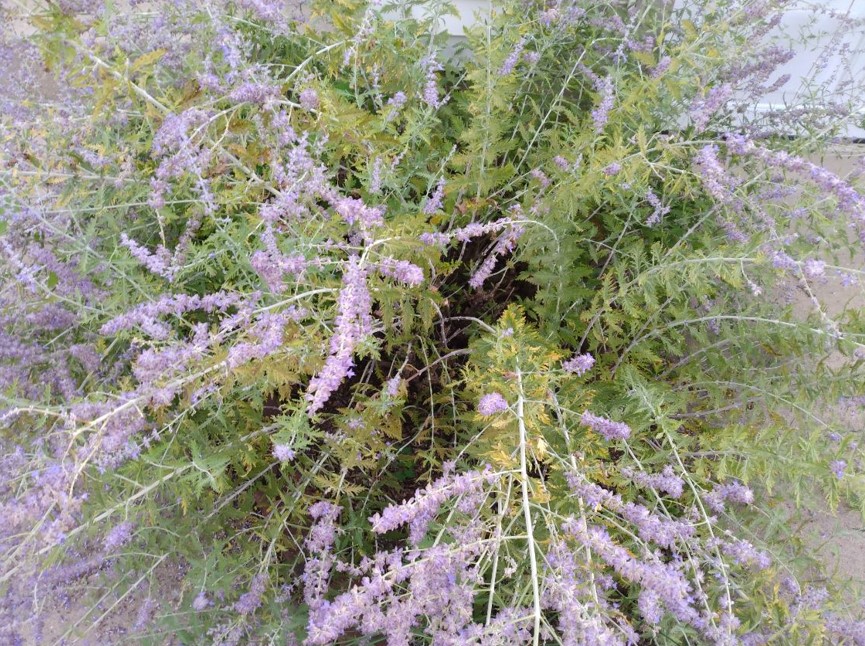
After a few hours of that, I grabbed a quick lunch and sat on the front porch covered in dirt, drinking coffee and watching some honeybees working the Russian Sage.
The neighborhood was traffic, crows, and thunder.
As I write this, there’s a slight breeze, a quickening rain, and a tornado warning for the next half-hour or so. But the cat is sleeping comfortably, and the air is full of birdsongs, so at least for now, it appears that we’re okay.
My intentions are to get back out there and cut the grass once everything blows through. That’ll probably take another hour or two, so I’m content to sit here typing away, listening to the rain and the rumble of the thunder.
When I was a kid, thunderstorms used to terrify me. I remember wrapping a pillow around my head so I wouldn’t be assaulted by the noise. Now, the fiercer they are, the more I love them. Apparently, there are some things in life we begin to make peace with as we get older…
As you start to move deeper into your recovery, and the patterns you’ve known for years or even decades begin to fall away, you come to understand just how lonely this work can be. But that’s whole point of it.
Everything seems to turn a shade of gray. The places you used to go no longer interest you. Friends become distant or disappear altogether. Or maybe, you’re the one who disappears. You no longer try to hide your feelings behind an obligatory smile or a lifestyle that doesn’t quite fit the way it used to. When you do make an effort to be in their presence, most of the people you once considered an essential part of your life now seem little more than acquaintances. They no longer get you, and they tell you that you’ve changed; that you’re sullen and you’re not as much fun as you used to be.
If you’re feeling lonely, maybe it’s because you’re finally leaving behind the stories that have held you back. You can’t become healthy while remaining sick. You can’t change and expect things to stay the same. You can’t fully take care of yourself and spend the ever-dwindling minutes of your life pleasing others. And here’s the thing: Recovery isn’t about making other people happy. It’s about throwing yourself into the pursuit of your own healing as deeply as you can, regardless of the opinions of others, so that when you choose to step out into the world, you’re able to do so as a more complete, healthier, and far more honest version of yourself…
In working through the often-arduous processes of my spiritual healing and emotional recovery, I’ve been blessed to have found myself in the presence of Elders who’ve taught me about the practice of putting our prayers on the wind. When we do this, we speak these things out loud so that, like seeds, they might take flight, land on fertile ground, sink deep roots, and potentially grow into something that feeds us all.
While I’ll never claim to speak for anyone else, my personal belief is that it’s necessary to discover whatever it is we’re here to do…and to do it. It’s not like toting it around in your pocket, pulling it out when you need it, and putting it back when you’re done. It’s saying yes to something that shapes our very lives; changes us into the vessel it needs to bring it out to the People…
I’m at the point in my life where cashiers younger than I am call me “Sweetheart”. Thankfully, I’m also at another point in my life: the one where I can graciously accept it. For a while, I wasn’t sure about this whole getting older thing. It was all kind of weird, actually – sort of a second teenagerhood. I was too young to fraternize with the Elders, and too old to hang around with the young’uns.
But sixty-two has proven to be something of a magic number; almost a kind of sweet spot. My body certainly doesn’t lie; I’m sixty-two not twenty-two. And I occasionally have to rest between rounds of yardwork…especially when the heat index approaches anything north of ninety-five degrees. But instead of catching myself thinking, “Shit, I must be getting old,” as I often used to do, now I simply smile and think, “Well, it’s not like I have a deadline…“
Those of us with garages or sheds that double as workshops understand that free space is a privilege. Mine, for example, is packed to the rafters with odd-sized lengths of various kinds of wood, tubs of billets waiting to be turned into spoons, carving tools, a meager but appropriate assortment of power tools, a lawnmower, a couple semi-retired bikes, a rolling shop table, other bits of assorted stuff too numerous to mention, and a nearly ready-to-braid harvest of this year’s garlic. I’ve gotten used to walking – and working – in there through dedicated practice. It’s easy for things to pile up after a while. Still, with a bit of adjustment, I can find the room to put my feet up with a craft beer or a cup of coffee, look upon my work, and call it good.
There’s a sacredness to the spaces in between things. They’re little doorways that allow the Medicine in. They give us time to rest and breathe, to harvest what was planted in the action, to take it in and let it nourish these bodies of ours which move, perhaps, just a little bit slower these days…
It’s been a while since I’ve been able to get myself out to the garage and putter around in the workshop. Recent changes in the weather required turning it into a staging area for some new patio furniture, so there was barely enough room for walking out there; let alone tinkering with hatchets and knives or any of the other implements of destruction that have made the place their home.
Yesterday, however, the weather shifted a bit, and I was able to put together a new deck box and move the furniture out to the patio. I also rearranged the garage, and set to work sprucing up this old beastie, which I recently rescued from the workshop of close friend who passed away a few years ago.
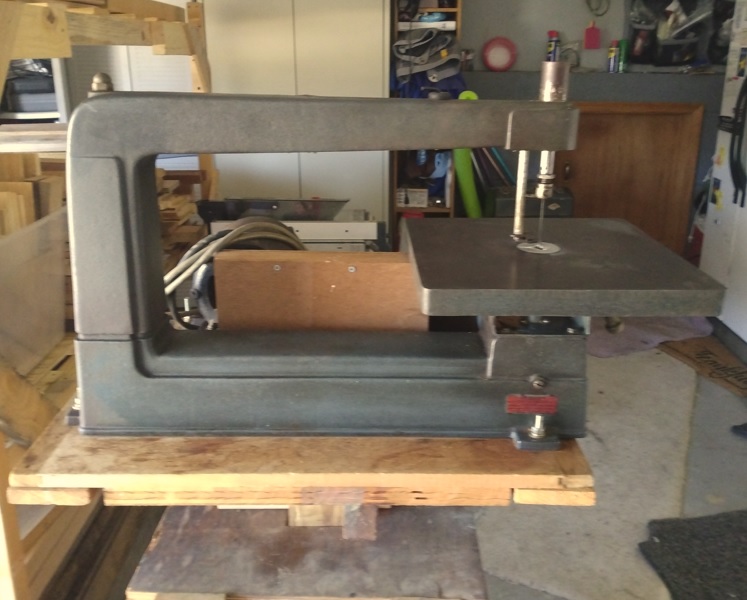
It’s an old-school, cast-iron Craftsman scroll saw that’s seen its share of use. It’s hefty, clunky, and low tech; and I absolutely adore the thing…for exactly those same reasons. It’s currently sitting atop the platform he built for it, adjusting to its new surroundings. And after a good going-over with a steel Chore Boy and some WD-40, it seems to be settling in just fine.
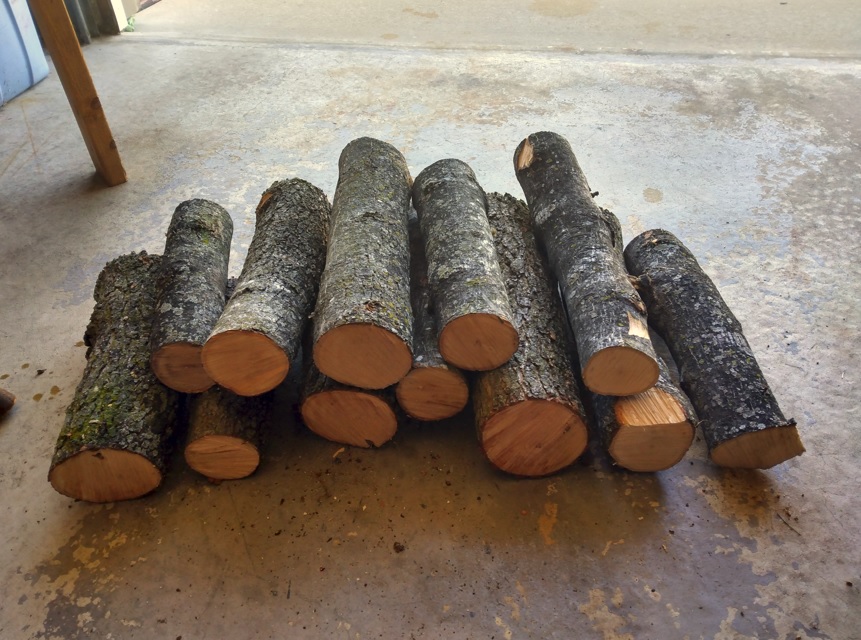
As an added bonus, someone dropped a couple of small Maple trees right down the street from us. This windfall landed me a nice stack of clean, spooniferous* wood.
I ran the chainsaw through it earlier today, and my plan is to haul out the bandsaw and my carving axe and turn the lot of it into billets later this afternoon.
It’s been an abundant week so far – very little of it planned, but all of it rewarding, none the less.
I fell into a discussion with a fellow traveler a while back about recognizing the work we’re here to do, and how that actually compares to the stories we’ve told ourselves about how our lives should be. This is not to discount the value of planning or the uplifting quality of dreams. And yet, as is often the case, we’ve both come to find that our current lives bare little in common with our past imaginings of them.
“If it lands at your feet, it’s yours to do,” he told me. It’s a philosophy that flies in the face of a culture that often demands of its children an answer to the question, “What are you going to be when you grow up,” and then proceeds to herd them headlong through high school and college, and straight into the workforce, with little or no time for self-discovery.
These days I’ll admit that I’m blessed with a life that reveals itself on an almost moment-by-moment basis. Living this way is not for the faint of heart. Nor is it for those who demand a world that bends to their ideas of how it should be. It’s often unpredictable, and therein lies its Medicine. Having said this, it also readily offers up its own unerring guidance if one can simply listen for it, and answer, “yes…”
*Spooniferous, Adj. – A type of wood – regardless of species – possessing qualities rendering it appropriate for the crafting of wooden spoons.
When supper was ended, He took the cup. Again, He gave You thanks and praise. He gave the cup to his disciples and said, “take this, all of you and drink from it. This is the Blood of the New and Everlasting Covenant. It will be shed for you and for all men so that sins may be forgiven. Do this in memory of Me.”
Memory…
It’s a strange thing, but if mine records it correctly, I was somewhere around sixteen-years-old the last time I served mass as an altar boy at Saint Mary’s Visitation Church in Dickson City, Pa. As I write this, that was nearly forty-six years ago, and although I’ve only found myself inside a Catholic church a handful of times since then, if pressed, I can still remember a great deal of the liturgy verbatim.
During my years as a parishioner, I was not only an altar boy, but also a student at the parish grade school, which saw me regularly attending services like First Friday, Ash Wednesday, and Stations of the Cross with my fellow students.
There was a great deal of structure marbled through the meat of my religious upbringing. Confession on Saturday afternoons. Mass and Holy Communion on Sundays – but if the Host gets stuck to the roof of your mouth, don’t you EVER touch it with your finger… and for God’s sake, DON’T CHEW IT! Dietary and sometimes social restrictions on Fridays and High Holy Days. A whole legion of could’s and couldn’t’s, should’s and shouldn’t’s, do’s and don’t’s.
The rules and restrictions, and the rewards and punishments based on one’s ability to comply, brought a sense of order and purpose to my existence. They also brought an almost ever-present sense of guilt, shame, and fear. And while they certainly handed me more than enough of these things, what they never actually gave me was an intimate and personal connection with the presence of God.
That experience arrived decades later when, having just come through a very dark and heavily grief-ridden period in my life, I crawled into what would be the first of many sweat lodges. As I’ve said time and time again since that evening, some twenty years ago, I have talked to God many times, but that was the first time I actually heard Him talking back.
I wish to be absolutely clear that it is not my intention to set Spirituality against Religion. It is my deeply held belief that while many of us might be travelling along different roads, we are all pretty much headed towards the same destination. And if that’s true, what a wonderfully diverse assortment of stories we might share with one another once we get there!
The main point of all this is that aside from the occasional ceremonial guideline and teachings at the foot of an Elder, there don’t tend to be a lot of formalized restrictions to adhere to these days. Certainly, there are signs, if I’m aware enough to notice them; but the most important guidance comes from working to maintain a direct and open connection between heart and Spirit. Living this way has allowed my faith to deepen. It has also taught me to trust my instincts, and to accept with gratitude the portion that I’ve been given.
Some days there’s wood to chop, raised beds to build, stones to gather, or spoons to carve. Or perhaps, I might find myself holding space for someone who’s come to see me; or working through my own recovery in solitude or with my teacher.
When my humanity gets the best of me, it’s often convenient to wish for the times when the do’s and don’ts were laid out a bit more clearly and concisely. But just as my carving continues to evolve through the subtle – and not so subtle – lessons of wood, axe, and knife, my faith also continues to evolve through the subtle – and not so subtle – lessons of instinct, heart, and Spirit…
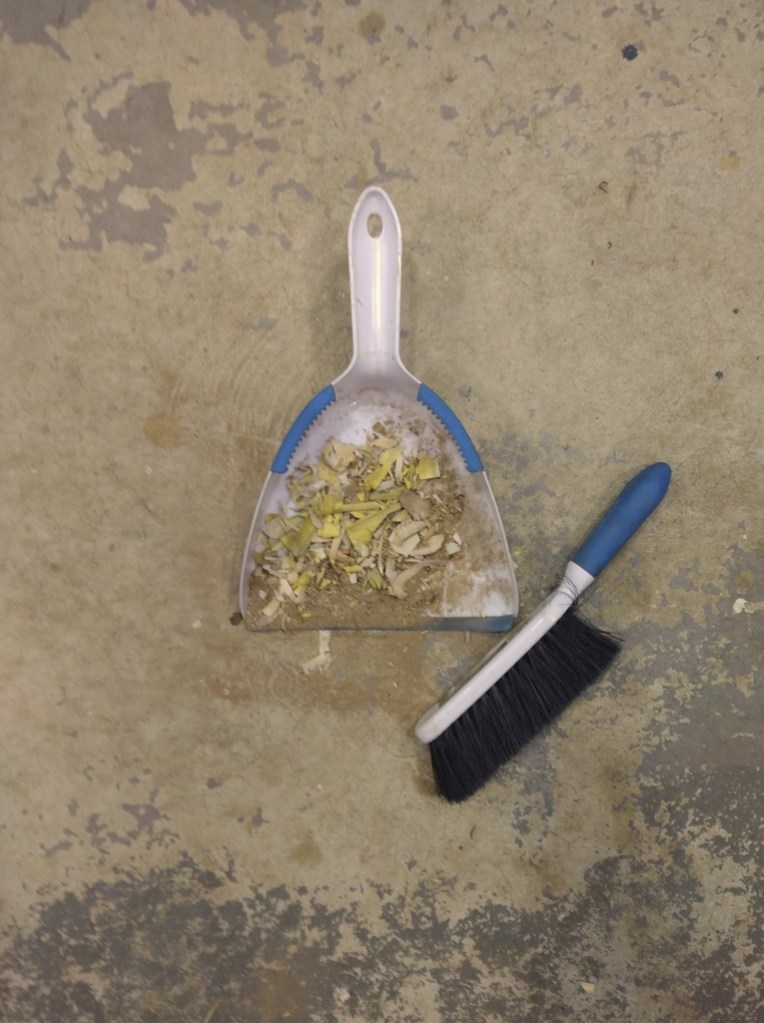
Well, the latest run of Arctic weather seems to have finally broken. And while it’s nowhere near what anyone in their right mind would consider balmy, this afternoon was still warm enough to fire up the kerosene heater and give the garage a thorough going over with a Shop-Vac and a broom. It was starting to become unpassable, so it felt good to be able to get out there and disentangle the log jam of power tools, projects, and scrap wood.
In his teachings on the Medicine Wheel, Grandfather Joseph Rael (aka Beautiful Painted Arrow) tells us that Winter is the season of childlike innocence and teachability. It’s the time when we lay low, share stories with one another, and reflect upon the workings of the past year.
It’s also when we empty the cupboards of the things we’ve put aside to nourish ourselves through the long, cold months of snow and darkness. In doing so, we begin to make room for next year’s provisions, which in turn will carry us through the following Winter.
There’s a lot to be said for this process of making room; not only of sweeping up the dust and remnants of assorted projects and tossing it all away, but of taking stock and nourishing ourselves on the wisdom of our accomplishments; of letting go of the people, places, things, and habits which no longer serve us – grateful for their having kept us going in the past, but recognizing, too, their tendency to keep us rooted there…
I spent the last couple of days involved in a project and filling an order, which I plan to mail out tomorrow. Today however, my shop sits silently in the aftermath of what might diplomatically be described as my overly expressive technique. It’s the same approach I bring to cooking whenever I’m in the kitchen. It’s loud, frenetic, and messy. It takes no prisoners and suffers no fools… save one.
And yet, there’s a kind of stillness at the center of all this chaos. It’s not something I actively seek to attain; rather, it arises by itself once everything else has surrendered to the noise. For me, whether crafting or cooking, it’s simply a matter of arming myself appropriately and charging headlong into the fray; immediate surroundings and faint-hearted onlookers be damned.
And while my writing typically runs much in a similar vein, today I ‘m wrestling with images trying to get out, and words that seem hellbent on refusing to let them. There are threads here, without a doubt, but weaving them into a cohesive fabric is another matter entirely. Still, despite all my efforts to the contrary, something sat me down and demanded I write.
So here I sit, trying to honor that in my own humble way.
I’ve been thinking a lot lately about the notion of process and how it applies to carving; more specifically, how it applies to carving spoons. From tree, to log, to billet, to blank, to rough-cut, to wooden spoon, the act of carving is one of constant refinement; of stripping away the excess material and revealing that which it obscured.
And even then, the process still continues. Once the tools have been put away, the spoon is oiled and burnished. For those unfamiliar with the term, burnishing is the act of rubbing the spoon with a smooth object like a pebble, antler, or polished round of wood. This closes the pores and takes away any remaining rough spots. After that, the spoon is oiled again and set aside to cure.
It might be tempting at this point to call the whole thing done and dusted. But in a way, for the spoon, the real work is just beginning. And that work will continue to shape the spoon for rest of its life.
How many of us have held a wooden spoon that’s outlived the relative who passed it down only to notice the patina it’s acquired from decades of nearly constant use in soups, sauces, or chillis? The scratches, burn marks, dents, and flaws that only serve to add to its character and shape it into something mythic; each little mark telling the story of the one who put it there. It’s in this way, that something created to serve a specific purpose continues to find itself remade by the very act of doing so…


 Bonja the Bodger