Today goes into the books as a productive one. I knocked together a simple greenhouse out of scrap wood and plastic tarp, field tested the Craftsman table saw I inherited a while back, and roughed out a Pennsylvania Cherry serving spoon.
Grandfather Joseph Rael a.k.a. Beautiful Painted Arrow, a holy man of Picuris Pueblo and Ute descent whose writings and ceremonial traditions have been instrumental in my own healing for nearly twenty years, tells us that work is worship. And while I’ve never had the opportunity to sit with the man and discuss this, I believe at least from a personal perspective, that I’ve come to understand this teaching with a bit more clarity.
Whether I’m deep in the midst of my personal recovery, holding space for someone else as they work through the process of theirs, or taking a carving axe to a billet out in the wood shop, there’s a common thread that ties these things together, and seems to embody Grandfather Joseph’s words.
When work is placed in front of us, and we commit ourselves to completing the task at hand, we are given the chance to recognize and affirm the existence of the One who put it there. In doing so, the work becomes a prayer, and its blessings flow out to the benefit of All Our Relations…
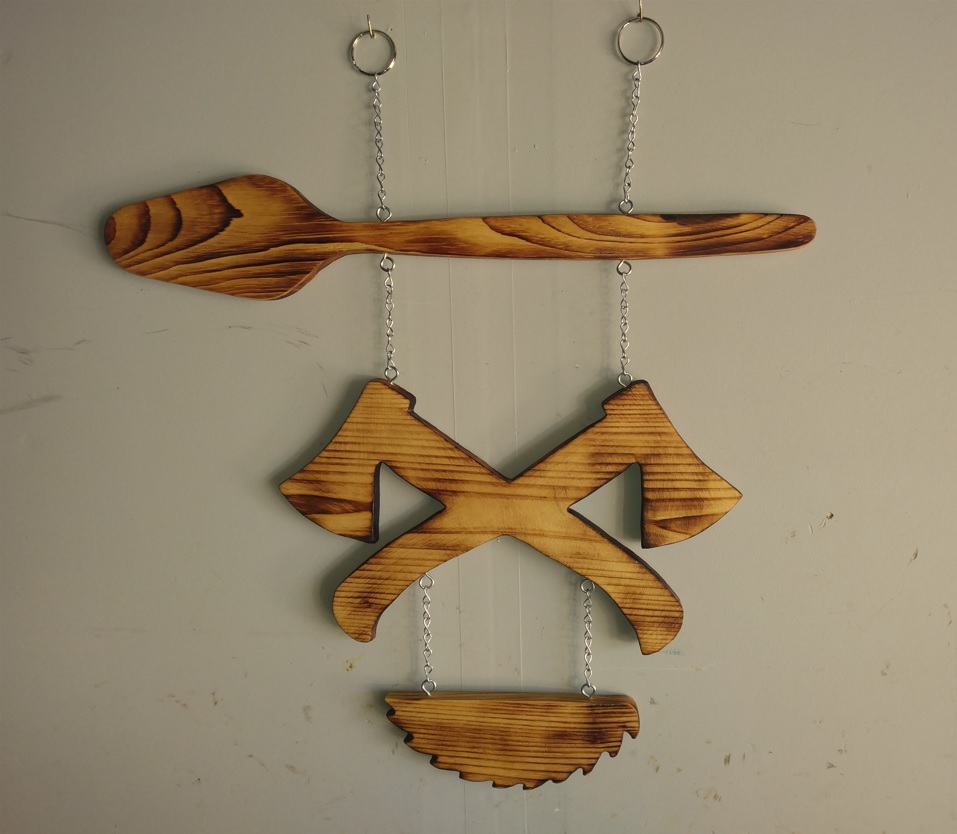
Sometimes it takes a little motivation to put some daylight between my ass and the couch. A few days ago, with that in mind, I finally decided to make everything official and craft myself a shingle. I plan to hang it in front of the house whenever I’m working in the woodshop.
I’ve been wanting to make one for some time now, and it feels pretty good to see it out there in the yard. It also reminds me that if I’m actually going to display it, I’d damned well better keep my tools sharpened and my hands busy.
A few of the locals have stopped by to ask me about it. Some of their questions have quickly turned into dissertations about what’s been going on in our lives. It’s been great, chatting with neighbors and keeping busy on these warm Autumn days. And as far as the motivation is concerned, today’s efforts resulted in a Butternut serving spoon. It had been drying in the wood chips for a little while, and on such beautiful afternoon, it seemed a shame not to break out my knives and finish it.
There’s something to be said for the feeling of completeness that settles in after a productive day. It’s quiet, still, and spacious; a kind of exhaling in a way that’s more than simply physical…
Of the many definitions one might find when researching the word “frig”, the most relevant to this current piece of writing is ” to putter around” or simply “putter”. It should be noted here that one might argue, and perhaps quite successfully, that combing through the myriad definitions of the word is itself a perfect illustration of the act of frigging.
I’ve written a great deal over the last few months about the blessings of the puttering life and just how fortunate I am to live it while still relatively young and healthy enough to appreciate exactly what that means.
That said, although the woodworking has been scarce at best, there’s certainly been no lack of activity around these parts. We’ve replaced the roof, laid in a new patio, put up a shed, widened the sidewalk, and repaired the concrete steps in front of the house. I’ve planted a garden, put up a few raised beds, and broken in a brand-new cast-iron griddle.
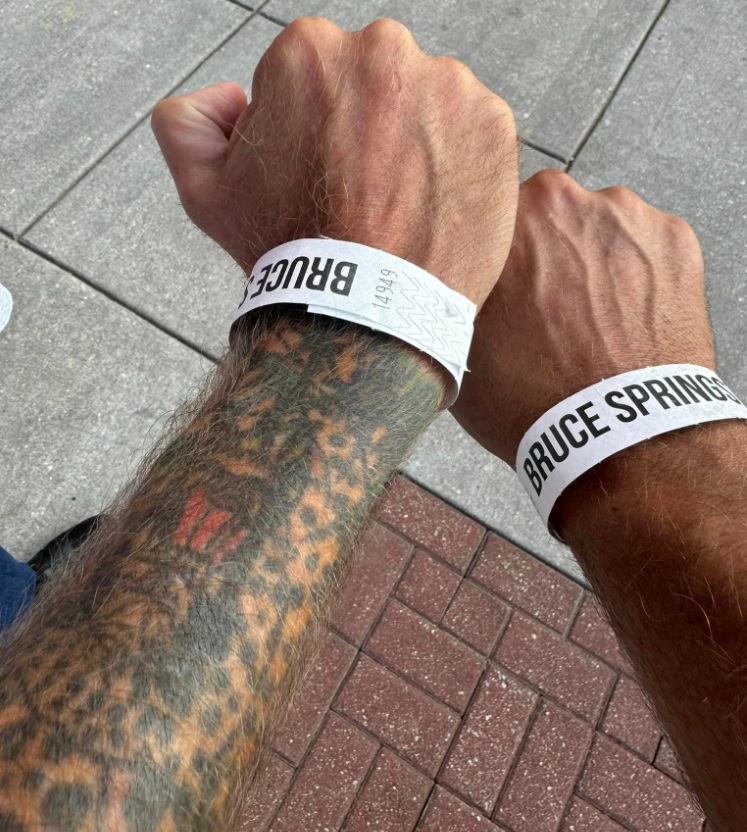
I’ve also had a few occasions to visit with some friends, one of which put me shoulder to shoulder and arm in arm with my brother from another mother; tears in our eyes at the Springsteen concert, singing “Racing in the Street” and remembering back some 45 years ago, when an 8-track pumped through a cheap set of speakers could rival the voice of God, and an afternoon at a kitchen table that formed a bond that continues to this day.
As these things go, there’s been neither dearth of abundance nor the time in which to receive it. And for everything they’ve placed at my feet, the living of these last few months has been enough. I find myself without the need to cling to them; and feel instead a simple and natural contentment in letting them go with grace and accepting their gifts.
Perhaps it’s just a part of getting older. In many ways the world has gotten smaller. There’s less of everything to go around these days and so I dole out what there is a bit more judiciously.
The path I travel is narrower and I move at a slower pace, but occasionally along the shoulders, among the broken rocks and tangled weeds, I catch the glint of something from the corner of my eye that would have gone unnoticed in the reckless haste of youth.
I tuck away the Medicine of the afternoons and smiles, the perfect breezes and freshly picked tomatoes, the concerts and the conversations on the patio.
I feel these things deep-down in my bones.
I’ll let them cook for a while; let those parts of me for which they’re meant take them in and be nourished. And when this break has finally come to an end, I’ll get back to my feet and go where Spirit points me: the vagabond who rarely leaves his yard…
While I typically prefer not to paint with an overly broad brush, one of the traits generally attributed to those of us who’ve grown up in households afflicted by alcoholism or some other form of dysfunctionality is an unbridled addiction to excitement.
Speaking strictly for myself, I can attest to the fact that there was a time when living my life required having, as Meatloaf once so aptly put it, “everything louder than everything else.”
I remember those wild drunken nights, the blue-collar barroom heroics, the friends who’ve died or disappeared, and the unshackled drama of it all, and I can honestly say that I don’t miss a single bit of it.
To see me sitting here out on the patio at 2:23 on a Monday afternoon, writing these words with my feet up on a cull wood coffee table after spending the morning putting up posts for a broken stockade fence, one might easily be tempted to remark, “Oh, how the mighty have fallen!” And in my younger years, I’d probably have shared that sentiment.
It’s a sure bet things are a lot less exciting these days; but there’s a certain sense of satisfaction that only comes from fixing a fence or knocking together a coffee table on the floor one’s own workshop.
As I near the end of this afternoon’s writing, a Monarch butterfly dances across the garden, a young rabbit suns itself in a threadbare patch of grass beside the wood pile, and the words begin to come with greater difficulty: indications all, perhaps, of just enough excitement for one day…
I spent a good part of yesterday tending to some of my carving tools and puttering around in the space I’ve created in the garage to serve as my workshop. While the music guaranteed that it wasn’t a particularly quiet afternoon, it was no less a very peaceful one.
This was a welcome respite from the clamor and chaos we experienced here last week as a result of having some work done to our home. What started out as replacing the roof and repairing the front steps quickly grew to include pouring a brand-new patio and widening the sidewalk in front of the house.
The work was superior, the price was extremely affordable, and everything was finished in a reasonable amount of time. We’ve all heard horror stories about botched repairs and ever-extending deadlines from people who’ve survived the process of what could only barely be called “home improvements”, and so to see it recounted here one might think that everything went smoothly. And for the average person – whatever that means – one might be right.
But there’s another side to this experience which I’d like to address at this point, and that is the living through of it as the adult child of an alcoholic and dysfunctional household. I’ve purposely chosen the word “household” here because despite whatever efforts my parents were able to put forth, it was only on rare occasions that the place ever came close to feeling like home. The obvious effects of my father’s incessant battle with alcoholism and emotional instability – coupled with my mother’s codependency – went a long way towards ensuring that the crucible in which I’d found myself as a child could generally be described as pretty much anything but home.
As I look back on those times, and perhaps even more importantly now that my recovery work is actually beginning to take root, to feel back on those times, I’m aware of a nearly constant state of grief. It’s deep, and it’s heavy, and it sits in my bones like fire.
And it is this same somatic expression of grief that was triggered by the banging, clatter, miscommunication, and obligatory upheavals of the tearing apart and putting back together of one’s living space.
While the adult part of myself was thrilled at the prospect of finally getting some long-awaited improvements taken care of, there was also that wounded inner child who felt that all of this was just another assault on the one safe place he’d desperately yearned for but because of forces beyond his control, believed he could never have.
I lived in that space for about two days; and in doing so, I came to know a great deal more about that child. And while I can’t say I’d like to repeat the experience, it has brought both of us that much closer to our well-being.
As I write this, the sun begins to slip behind the peak of our new roof, shadows lengthen along the patio, and a restful sense of peace has taken hold. The adult taps the keyboard, turning thoughts into words; while the child occasionally glances out through the sliding doors, watching Plantain stalks sway in the wind…
Some people have come to believe that the life they’re currently living is going to last forever. That is the very nature of their existence. Every day, I’m reminded of the fact that it most definitely will not…And that is the very nature of my own. This is a generalization of course, but there’s something about this that feels as if it cuts to the heart of the matter.
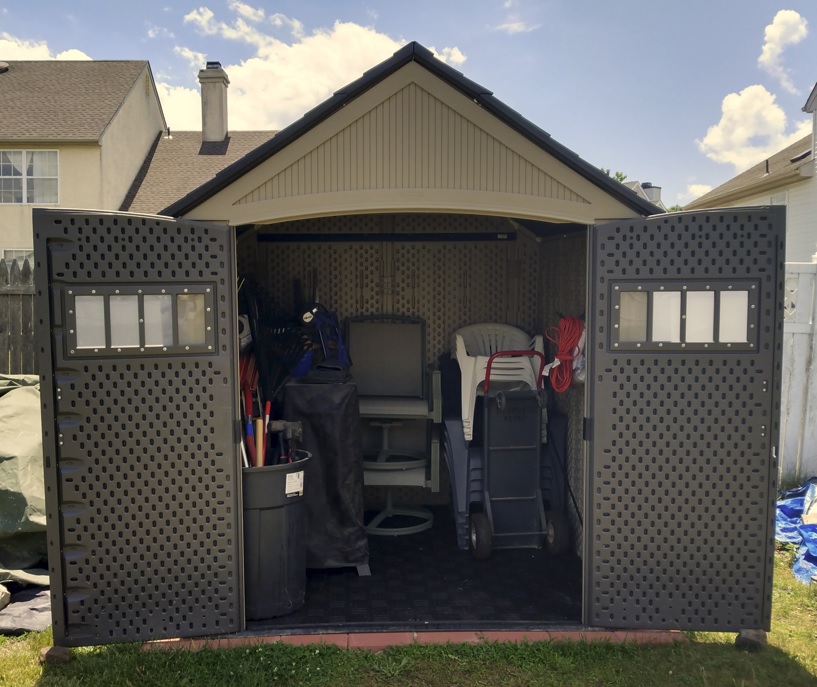
Last week, I was sitting on the patio surrounded by rabbits and the work of a few previous days. The cucumbers had made their first, timid advances toward the trellis, the Swiss chard was looking extremely proud of itself, and we’d just finished installing a new old shed. It originally belonged to a friend of ours who no longer had a use for it. She asked us if we wanted it and made her truck available; and with the help of neighbor, a few Germanic expletives, and a can of spray foam to plug the gaps, up it went. The foundation had been in place for several weeks, so it was good to actually have something sitting on it.
This was another step in the ongoing project of setting up my workshop. The garage is a whole lot emptier now; and after building some shelves and diving in with a broom and a pair of work gloves, there’s ample enough space for putting in a workbench.
The whole thing has unfolded in leaps and bounds, interspersed with periods of rest. Jump and wait; pounce and settle in. The rabbits have been particularly diligent in their efforts to pass on this wisdom.
In the meantime, the garlic beds are built and waiting for October, there’s grass to cut, words to scribble, and the occasional weed to pull. There’s also appointments and yardwork at my mother in-law’s.
I’m learning to accept my life as it comes these days. Watching the rabbits, feeding the birds, cooking, and tending the garden. The recovery work is often deep and requires as much attention as I can spare. But the spaces in between are often sweet and filled with a deepening sense of gratitude.
One might be tempted to ask where the carving is in the midst of all of this. It’s still alive and in there somewhere; that much I know for sure. My knives are sharpened, the wood is ready, and the templates hang within easy reach on the wall of the garage.
It’s been my experience that letting things rest for a while is not only good, but necessary. It’s in the spaces between the work that the Medicine often happens. It works its way into your bones and shows itself more clearly upon returning to the task at hand.
Jump and wait; pounce and settle in. Watching the rabbits. Taking time to breathe…
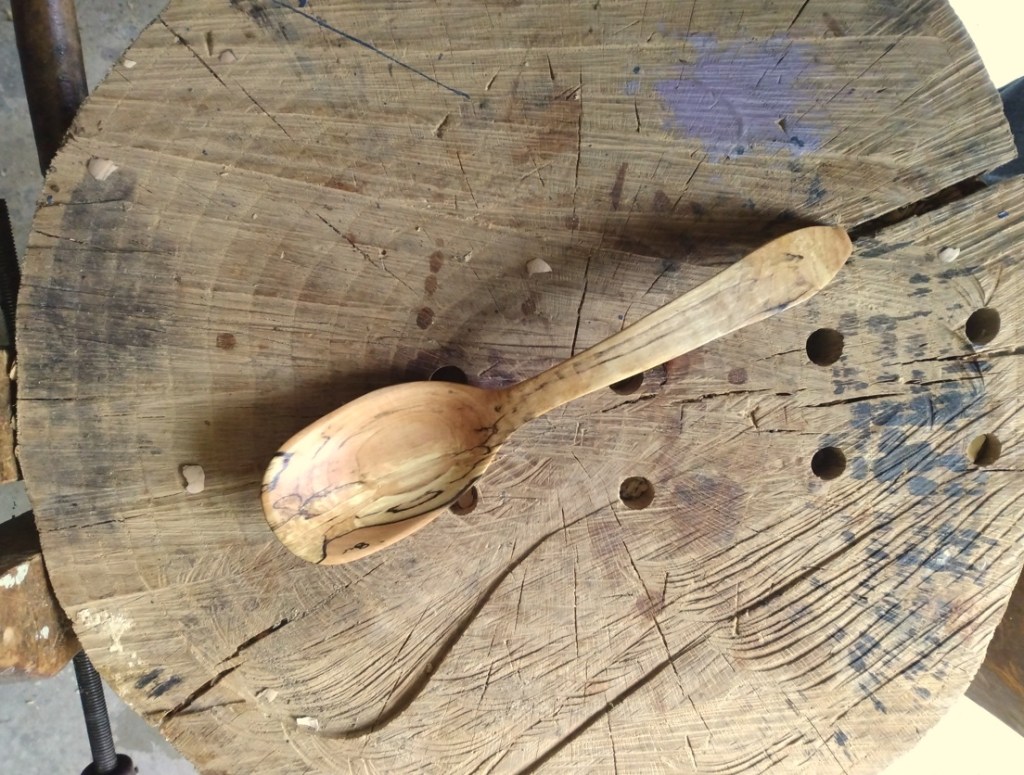
The intricate patterns and discoloration seen in this Beechwood spoon are the result of a process known as spalting, which occurs when an external fungus growing on the surface of a dead tree sinks its tendrils deep into the fiber of the wood in order to feed itself. Aside from potentially weakening the structure of the wood, spalting also causes the type of patterning displayed here when those tendrils create an armor of protein for protection.
It’s interesting to note that spalting can also occur in living trees experiencing some type of environmental stress. Exposing the wood to sunlight kills the process but leaves behind the colorful and obvious traces of its work. Because of this, spalted woods are highly valued and sought after by artists and woodworkers alike.
Those of us who’ve survived the stresses of growing up in households afflicted by alcoholism, codependency, or some other form of dysfunction often seem to experience a similar process. As children, we’re unable to resist the influences of the sickness in our environment, and so it reaches deep inside us and takes root. It lives there, marking us, and affecting the patterns of our lives in ways which serve to anchor it and keep it fed.
Through our healing and recovery work, we open ourselves up and expose these things to the light of realization. When we do, their influence over us slowly begins to die.
I was gifted with a couple pieces of Plum by some friends of ours whom we visited yesterday for a ceremony honoring the Fall. Plum is a heavier wood, and it’s difficult to carve, even when it’s green. What they gave me seems a bit dry, so it’ll probably end up feeding the band saw instead of a hook knife and hatchet.
Their property is pretty heavily wooded, and by now most of the trees have gotten down to the business of shedding their leaves, so the ground was littered with tatters of red and brown.
So much of this season and the work it involves centers around the release of things which no longer continue to serve us; the allowing of them to drop like dead leaves amid the lengthening shadows of November.
A teacher of mine with whom I’ve worked for the last several years has encouraged me to study the trees during the Fall; to sit and meditate on how easily most will release their burdens to open space for the new growth of the coming Spring. And yet there is that occasional defiant Oak, roots driven stubbornly into the soil, that clings to the skeletal remains of a few dead leaves even as its branches rattle against the frozen tirade of January’s winds.
I wonder how often we have found ourselves hanging onto our old ways with that same Oak-like tenacity, all the while cursing our seeming inability to release them…
But there is also another teaching wrapped inside the fabric of this meditation. Just before they drop their robes and stand shivering and naked before the icy truth of Winter, the trees breathe in every available photon of light and hold it deeply as if to remind themselves that the coming darkness is not a permanent thing; that the light remains even in presence of so much apparent death and decay.
It’s important to remember this; to find those places within ourselves where the light has gathered; and to know that it still remains, even though all apparent evidence of it has crumbled and fallen away in the long, cold, necessary dark of Winter…
The fences in our neighborhood are a dapple of white and grey: rickety colonnade and garish vinyl randomly overlapping; huddling impossibly close to virtually nonexistent property lines; taking their half, as my mother would say, out of the middle.
Yet somehow the occasional seed finds sanctuary in one of the small and nearly sunless canyons created by this assertive demarcation. It takes root there among the stray blades of crab grass and tendrils of Virginia Creeper, only to hurl itself emphatically towards the light; threatening in its struggle to topple the very walls of the fortress that surrounds it.
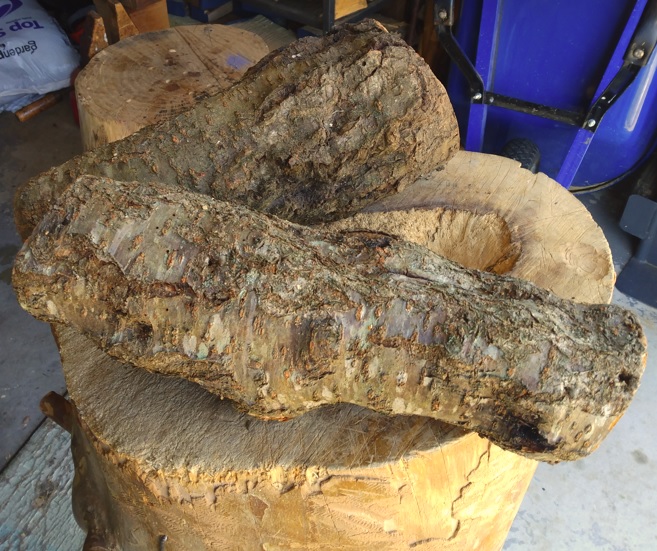
One such seed became the Mulberry tree I was forced to drop earlier this summer. As a rule I never fell a living tree for my carving. I typically resort to road-kill wood or timber brought down by storms or high winds. But the location of this particular tree and its impending assault on my and my neighbor’s fences meant that it had to come down. As I needed to replace the fence panel anyway, I decided to do the deed myself. And so armed with chainsaw, axe, and root-cutting shovel, I went to work
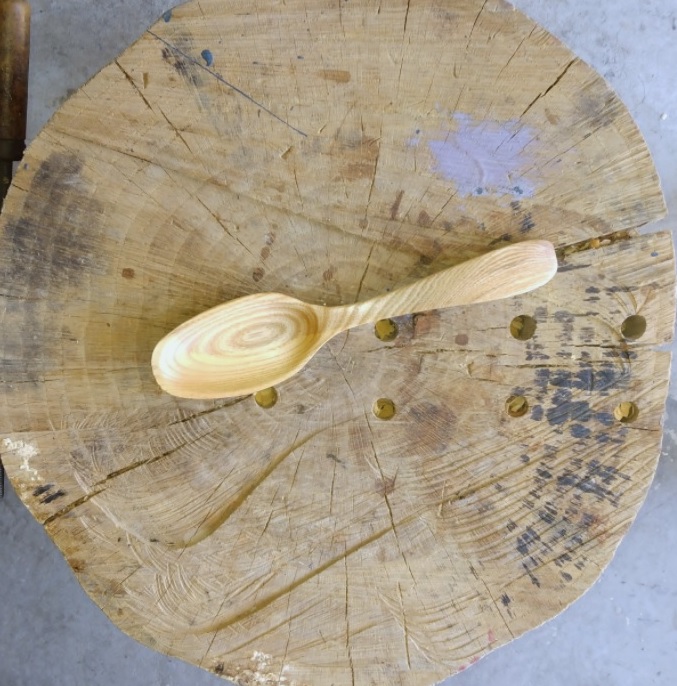
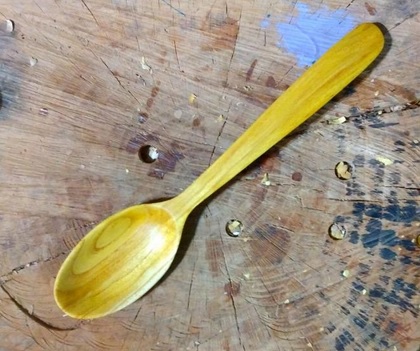
The tree was gracious in its death and generously gifted me with an abundance of beautiful white and golden-yellow billets, one of which yielded the spoon pictured above.
My ongoing recovery has taught me to acknowledge the contributions of the ones who’ve come before us: the sacrifices that put the food on our table, the lifework of Elders handed down to generations of children walking behind them, the impact of our parents’ sickness expressing itself as the wounds we seek to heal.
Grandfather Joseph Rael (aka Beautiful Painted Arrow), the visionary of Picuris Pueblo and Ute descent whose teachings resonate at the heart of so much of the ceremonial work undertaken by our spiritual community, tells us that work is worship. If so, then perhaps the spoon itself is a remembering of this; a prayer of gratitude given form and released into world for the service of others…
My brother in-law came over on the weekend and we installed an electric awning over the postage stamp-sized slab of concrete in the back yard that passes for our patio. Afterwards I dug out the furniture we had buried away and knocked together a small coffee table from some of the scrap wood that’s been accumulating in the garage.
It’s not exactly top of the line furniture, but it answers to the work it’s called to do, and has just enough dents, gouges, and imperfections to bless it with what a more gracious observer might refer to as “a rustic sort of character”. I torched and sanded the table before I sealed it, and the ordeal seems to have reawakened something inside the wood.
But isn’t that what ordeals often do?
I’m reminded of the difficulties I’ve faced during my recovery work; the dents and gouges – visible and invisible – that mark the trials of growing up as the child of an alcoholic and emotionally unstable father, and a fiercely and terminally codependent mother.
These experiences have shaped me accordingly; sanded away a few of my straighter edges…left me a good deal more than a little bit scrappy. And yet, in spite of – or perhaps more accurately, because of – all of this, I seem to notice that nearly every day something else inside me reawakens…




 Bonja the Bodger