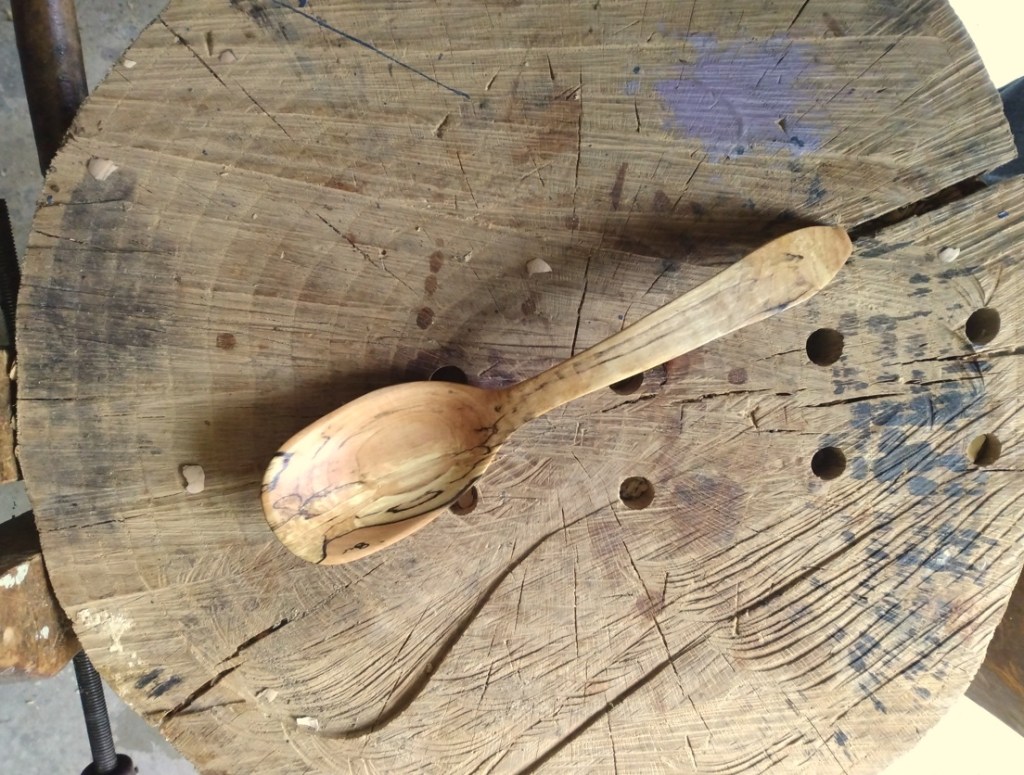
The intricate patterns and discoloration seen in this Beechwood spoon are the result of a process known as spalting, which occurs when an external fungus growing on the surface of a dead tree sinks its tendrils deep into the fiber of the wood in order to feed itself. Aside from potentially weakening the structure of the wood, spalting also causes the type of patterning displayed here when those tendrils create an armor of protein for protection.
It’s interesting to note that spalting can also occur in living trees experiencing some type of environmental stress. Exposing the wood to sunlight kills the process but leaves behind the colorful and obvious traces of its work. Because of this, spalted woods are highly valued and sought after by artists and woodworkers alike.
Those of us who’ve survived the stresses of growing up in households afflicted by alcoholism, codependency, or some other form of dysfunction often seem to experience a similar process. As children, we’re unable to resist the influences of the sickness in our environment, and so it reaches deep inside us and takes root. It lives there, marking us, and affecting the patterns of our lives in ways which serve to anchor it and keep it fed.
Through our healing and recovery work, we open ourselves up and expose these things to the light of realization. When we do, their influence over us slowly begins to die.
And yet their traces never completely fade…
 Bonja the Bodger