When I get frustrated and the exhaustion sets in, my skin tends to get a little thin…and it did this morning. I’ve learned that when things get like this, it’s usually a sign that I’m pushing too hard. And so, I need to just take some time and rest.
And that’s the thing: rest is also a big part of this recovery process. Learning to sit. Learning to love ourselves enough to take care of ourselves and to just be…to just chill out, breathe, relax when we need to.
To feel these things; not to numb them out, not to stuff them down.
Because running away from our feelings – stuffing them down, hiding from them, not showing them in public – is a lot of the reason that we carry these wounds in the first place…
If you’d like to see more, please check out my podcast, “Putting it on the wind,” on YouTube:
Grandfather Joseph Rael teaches us that ceremony begins as soon as you say “Yes” to it. And I really become aware of that about a week or so before our gatherings occur, which they do on the first Saturday of every month. I start to slow down. I start to pay attention to what’s going on inside me, what’s going on in my environment. I start to take a little more notice of what I eat, what I drink, how I move through my day.
And then, as time draws closer, especially on this last day, it really begins to wind up. And the simple chores that we have to do, like putting an extra leaf in the table or taking out the plates and the silverware, getting the crockpot ready for the potluck after the ceremony, raking out the firepit, making sure that we have enough chairs…all those things that go into it, they tend to become more like prayers…
If you’d like to see more, please check out the latest episode of my podcast, “Putting it on the wind,” on YouTube:
As we’re getting down to the last few scraps of 2025, it’s probably a good time to do a little bit of reflecting on what this past year has been like.
Speaking from the perspective of my own emotional recovery – my own spiritual healing – the work’s been pretty difficult, and at times, it’s just been downright exhausting.
But there’s one thing I’ve learned these last many years, and that is, that when you plow deep, you’re going to hit some big stones. It takes a lot to dig them out, but when you do, buried beneath them, you can usually find some pretty good, rich, fertile soil. And that’s definitely been the case this year…
If you’d like to see more, please check out the latest episode of my podcast, “Putting it on the wind,” on YouTube:
I picked up a few requests over the holiday, so I’m out in the garage, cutting some Cherry and Butternut blanks, and getting to work on the initial steps of bringing an antique handaxe back to life.
The heater’s finally taken the edge off the chill, and the workshop’s warm and welcoming; it’s the perfect day to be out here with my tools, enjoying the space that inevitably opens up after the blissful chaos of the annual celebrations.
I’m reminded, in the silence of this space, of the feeling of sitting on the beach when the waves have withdrawn. There’s an openness to it; and a deep and palpable grace that only comes from the knowing and accepting of its impermanence…
As a kid, you walk into a room and you feel anger there…well, you feel angry, so you must be angry. You feel sad, so you must be sad. We learn to internalize those things, to take them on, and to come at the world from the perspective of those things that we’re feeling – believing that they’re our own.
As we get older and lean a little heavier into our work, hopefully, we begin to sort some of that stuff out. We begin to learn what’s ours and what’s not; what we can let go of – what we can hang onto.
And this can be incredibly difficult when we see people we really love going through a tough time. One trap in particular that it’s easy to fall into as someone who’s empathic, is the fix, save, and rescue trap. We see someone suffering, and we want to fix the situation. We want to save them from it; to rescue them from their peril.
Sometimes our motivations aren’t as unselfish as they seem, whether we’re aware of that or not. Part and parcel of growing up in a house full of emotional instability is often the dance of codependence: “I love you because of how you make me feel.”
In the presence of suffering, especially when it’s the suffering of those we care for, we don’t like the way we feel when we see them suffer, and so we want to rescue them; to stop their pain in order to stop our own.
If you’d like to hear more, please check out the latest episode of my podcast, “Putting it on the wind,” on YouTube…
It’s the day after Thanksgiving. I stepped out onto the front porch at 4:30 this morning to catch a few breaths, and noticed Orion, prominent in the West – undaunted despite the orange glow of a streetlight in front of our house.
I’d already been up for a couple of hours, but the sky was incredibly clear, so I stood outside a little bit longer, then went back in to brew a pot of coffee.
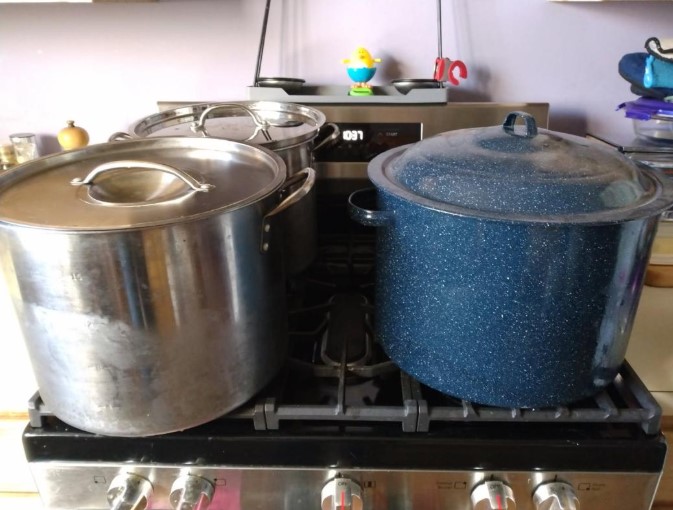
Now it’s a few hours later, and I’m hip-deep into three big kettles of soup stock.
It’s a known fact in certain circles, that I plan on making soup stock every year on the day after Thanksgiving. The family pitches in with turkey carcasses, and my wife and I scrounge up every mushroom stem, onion skin, and vegetable scrap that isn’t composter-worthy. I also collect the juice from most of the meat that I cook, and strain it into ice cube trays.
Each year, preferably on this date, the entire mess goes into as many kettles as necessary, and what follows is a process that’s best described as equal parts alchemy and chaos.
When it’s simmered long enough, I strain everything into a single kettle, and render it down to somewhere between two and three gallons.
The ingredients vary from year to year, so it’s always a mystery until it’s done.
My wife affords me plenty of space, which is either deep consideration or a keenly honed sense of danger on her part. Truth be told, it’s probably a little of both. The first time I cooked in our kitchen, she took one look at my mandala of spices and oils, and an army of bowls filled with various ingredients – all laid out in the order in which I’d add them – smiled, and said, “I’m just going to walk away now…”
It’s been years since then, but as I write this, I’m thinking the exact same thing:
There was always something that kept me just on the edge of it. I always felt like I never quite fit in…because the truth of the matter was, I didn’t. But I didn’t know that was because Something much larger than myself was looking out for me. In my own despair, I saw myself as always being just a little out of touch…
Yes, there is a spiritual part in all of this, but we’re here in a physical world. And there are certain aspects of moving through this world that we simply can’t afford to ignore.
I like to think of it as an electrical circuit; more specifically, as a circuit powered by a battery. If you connect both ends of the wire to one terminal on the battery, in this case the spiritual or the physical, the circuit doesn’t work; the energy doesn’t flow.
When you stand rooted in both worlds, and you connect one end of the wire to each of the terminals of the battery, then the energy can flow. The energy of the spiritual can enter the world through us and flow out into the world for the service of all.
When you intentionally enter into space, into silence; and you sit with it, one of the things that begins to happen is that all those things that we keep buried down beneath the crushing weight – the purposely assumed crushing weight – of all the noise and activity in our lives, without any of that there, those things begin to stir. And if we really sit with the silence, they can come up.
Even the mind is going to turn against us. The Monkey Mind starts to chatter, to jam as much stuff, disconnected thoughts, whatever, between us and that silence. But eventually, if you can get beyond it, and you can really begin to work at it – to slip into the silence, those things move. We can find ourselves experiencing old body memories, somatic releases, emotional memories.
And that’s the other thing silence will do for us. It can act as a container. It can act as a vessel. And so those things that now have room to move, and to come up, now, because we’ve eliminated all the external noise – all of the external static – they have room to come out.
So many of us have this idea that we need to go out and save the world. That we need to stop war; we need to stop killing; we need to stop hatred. But honestly, if we just put an end to war, does anybody really believe that it wouldn’t start again? Does anybody believe that if we stopped all the killing, it wouldn’t start again?
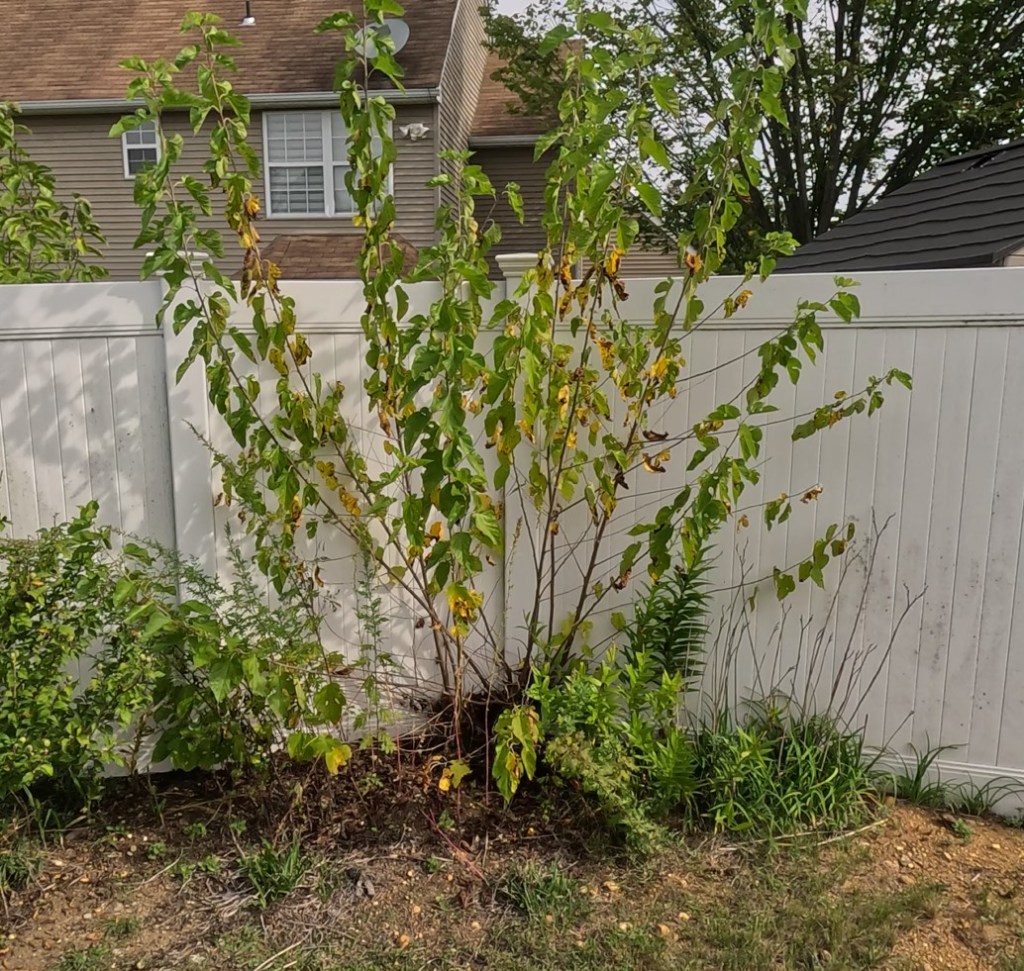
I have a Mulberry tree in my back yard that’s one of the most tenacious plants I’ve ever had to deal with, and I respect its tenacity a lot; but unfortunately, it’s threatening a fence, so it’s gonna have to come down. And I have clipped this thing; I have dug away at it; I have used the most environmentally-friendly chemicals on it that I could, and the thing is still there. And the reason it’s still there is because I haven’t dug it out by the root yet.
And so, that’s the thing…
When we gather in our monthly circles and we hold ceremony, sometimes there’s a lot of deep, cathartic release. And one of the things that we’ve learned in working this way – and from teachers who’ve shown us how to work this way – is that when someone is in the midst of something; when they’re in the midst of doing their deep work, if they’re crying, if they’re shaking, you don’t comfort them. You don’t put your arm around them. You don’t tell them they’ll be alright. You sit quietly. You hold space for them. And you let them do their work.
Because so often, we comfort others in their misery, in their sorrow, because we don’t like the way we feel in the presence of that. And so, what we’re really doing is projecting our own pain onto them and trying to heal it vicariously; which is about one of the most selfish things that another human being can do…

 Bonja the Bodger